There Are Simply Fewer Jobs Available

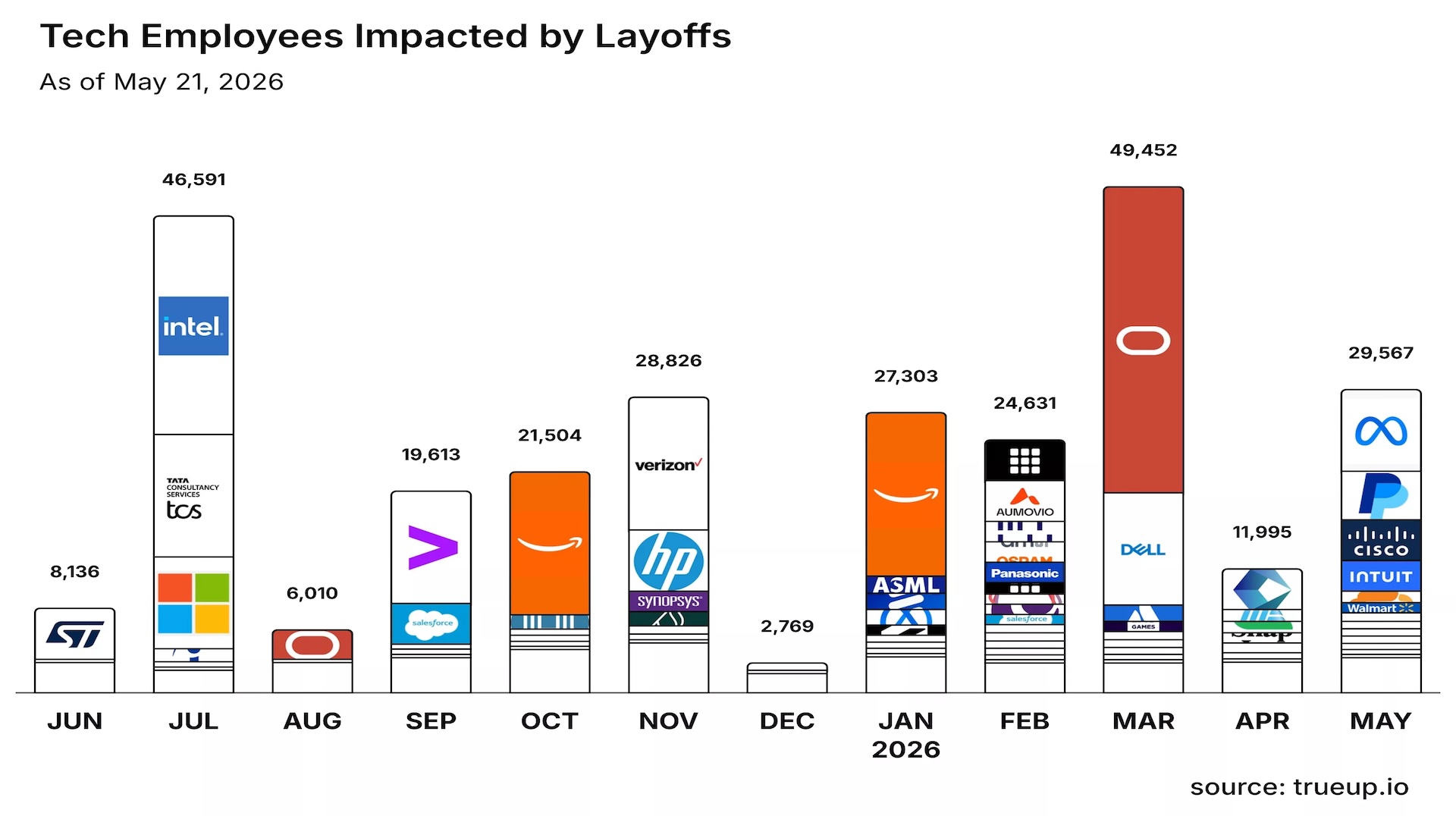
The job market for software engineers has been rough for a few years now, and there seem to be fewer jobs available than before.
What caused the number of open positions to drop off so dramatically?
1. AI Is Reducing Headcount
While AI is unlikely to completely replace software engineers, AI tools are contributing to reduced headcounts in organizations:
The most significant structural shift of the past two years isn’t the economy — it’s AI.
- AI tools like GitHub Copilot, Cursor, and Claude have increased engineers' productivity and made individual engineers much more constructive, thereby reducing the number of engineers needed to complete certain projects. Organizations that once planned to hire ten developers may now believe they can achieve similar results with six or seven, supported by AI tools.
- Companies are using AI-powered tools to automate software engineering tasks across the entire development lifecycle, shifting developer roles from manual coding to oversight and architecture. Primary automated tasks include generating boilerplate code, debugging, performing automated software testing, and drafting documentation.
2. Economic Uncertainty, Tariffs, and Geopolitical Pressure
Economic uncertainty has led many organizations to be more cautious about hiring. Trade tariffs have raised costs for hardware-dependent companies. Ongoing geopolitical instability, including the Iran war, has added uncertainty to enterprise spending, prompting CIOs to delay or freeze discretionary headcount. Businesses are delaying expansion plans, reducing budgets, and postponing hiring decisions until they have greater confidence in future market conditions. The results: fewer new positions being created.
3. AI Is Taking Over More Entry-Level Work
Many of the tasks that have shifted to AI-powered tools have traditionally been performed by entry-level and junior engineers. Responsibilities such as writing simple code, generating documentation, creating unit tests, and debugging simple issues can now be partially automated. As a result, some organizations are hiring fewer entry-level engineers and relying more heavily on AI-assisted workflows.
The result is that “entry-level” roles — the traditional on-ramp into the industry — are quietly disappearing, and the bar for what counts as “junior” has risen sharply. It requires new Computer Science graduates and other newcomers into software engineering to have more knowledge and hands-on experience than was required previously.
4. Shift Toward Contract and gig Workers
In the past few years, there has been a noticeable shift in the hiring practices of software engineers. Instead of hiring full-time employees, many companies are now turning to contractors and freelance (“gig”) workers.
While these practices provide companies with flexibility (easier to bring on, easier to let go, no benefits required) during uncertain economic periods and reduce long-term employment costs, they create fewer stable, long-term opportunities and greater job-security uncertainty for job seekers, further reducing an already shrinking job market.
5. Cost Efficiency and Shareholder Pressure
After years of “growth at all costs,” public and private tech companies alike pivoted hard toward profitability. Headcount became a liability to manage, not an asset to grow. Public companies face constant pressure to control costs, improve efficiency, and demonstrate profitability to investors. Following years of aggressive growth, many organizations are now prioritizing leaner operations, which often translates into reduced hiring and workforce reductions across much of the technology industry.