The Impact of Faster Technology and Product Cycles on Hiring

As discussed in Acceleration of Technology Cycles, modern technology now evolves at a pace that would have been unimaginable twenty years ago. Advances in AI, cloud computing, automation, cybersecurity, and modern infrastructure have dramatically accelerated innovation across the tech industry.
At the same time, software and product development cycles have also compressed. Companies now release products faster, deploy updates continuously, and compete aggressively to ship new features before competitors do.
These combined shifts fundamentally changed what companies expect from software engineers — and how they hire them.
As technology and development cycles accelerated, hiring expectations rose, creating a far more competitive environment for both new graduates and experienced engineers.
In today’s market, employers increasingly prioritize engineers who can learn quickly, adapt rapidly, and contribute with minimal ramp-up time.
Both employers and job seekers find themselves navigating a continuously changing and challenging environment.
Faster technology and product cycles have far-reaching consequences on hiring:
1. Shorter Lifespan of Skills
The only true constant in technology is change. Technologies come and go, while others evolve so dramatically that they become almost unrecognizable over time.
With technology evolving rapidly, skills that were in demand a few years ago can quickly become obsolete as increased demand for specialized skills in cutting-edge technologies grows.
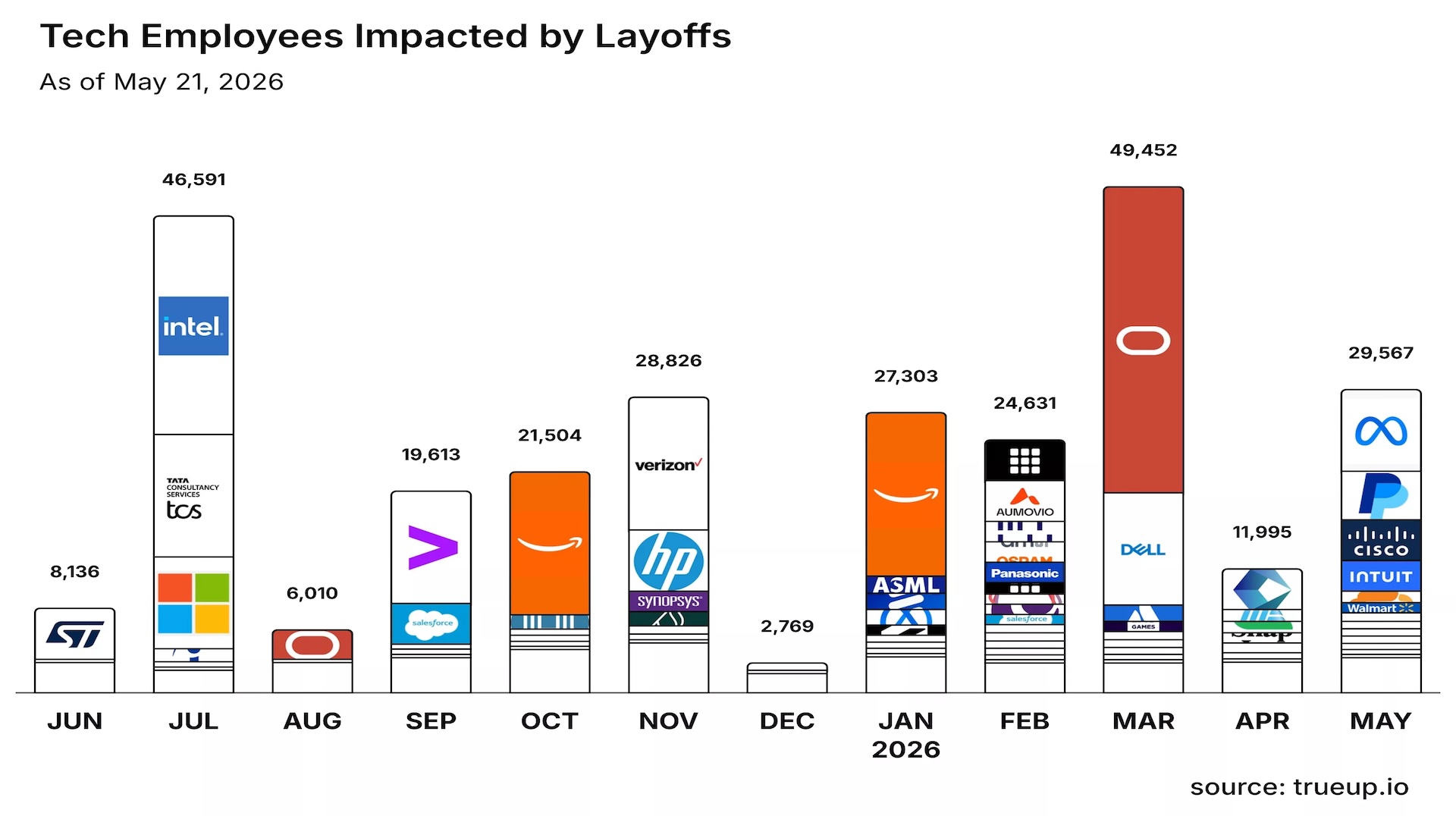
Job seekers with skills in older technologies are having a much harder time remaining competitive when the market experiences a hiring freeze or massive layoffs. The constantly evolving landscape makes it harder for job seekers to find jobs with older, less lucrative technologies.
JavaScript is a good example. What started as a simple scripting language at Netscape in the 1990s has evolved into a massive ecosystem that now includes strict typing, complex frameworks, build systems, and modern development patterns that barely resemble the original language.
2. Need for Constant Upskilling
Technology evolves so quickly that educational institutions struggle to keep up, and companies have become less willing to invest in providing in-house training for new hires and current employees.
As a result, software engineers are increasingly expected to continuously adapt and update their skills independently through online courses, certifications, hackathons, technical documentation, personal projects, open-source contributions, and hands-on experimentation.
Many employers now expect candidates to already have at least some familiarity with modern and emerging technologies. This creates constant pressure for job seekers to stay current with new programming languages, frameworks, cloud platforms, AI tools, and development practices to remain competitive.
For software engineers, continuous learning is no longer optional - it is part of the job. It’s not something that ends after graduation or onboarding — it has become a permanent part of working in tech.
3. Demand for Specialized Skills
Faster technology cycles have resulted in the rise of highly specialized fields. Companies are now looking for developers with specific expertise in areas that are essential to the company’s growth and innovation, rather than hiring generalists.
Companies increasingly want engineers with experience in areas such as:
- AI and machine learning
- Cloud infrastructure
- Cybersecurity
- Data engineering
- DevOps
- Distributed systems
- Automation
General programming knowledge is no longer enough. Employers now prefer candidates who already understand the tools and technologies used in modern production environments. This is especially true at startups and fast-moving tech companies where engineers are expected to “hit the ground running” – come up to speed and contribute quickly after getting hired.
4. Growing Importance of Soft Skills
As technology becomes more complex and team-oriented, soft skills are becoming increasingly important in the tech industry. Companies are no longer hiring based only on technical ability. Employers also want engineers who can communicate clearly, adapt quickly, collaborate with others, and take the initiative to continue learning on their own as technologies evolve.
Modern software development often involves working across multiple teams, participating in meetings with non-technical stakeholders, explaining technical decisions, and adjusting to rapidly changing priorities. Engineers are expected not only to write code, but also to work effectively with product managers, designers, executives, clients, and other developers.
Because of this, companies increasingly value soft skills as essential for long-term success in tech, particularly:
- Adaptability
- Communication
- Collaboration
- Curiosity
- Problem-solving
- Teamwork
- Flexibility
- Time management
- Critical thinking
- Willingness to learn
In fast-changing environments, the ability to learn new technologies and adapt to change has become just as valuable as existing technical knowledge.
5. Fewer Traditional Entry-Level Roles
One of the biggest impacts of faster technology cycles is the decline of traditional entry-level software engineering roles. In today’s fast-paced tech environment, those opportunities are becoming less common.
- Many so-called "entry-level" tech positions now require candidates to have several years of experience, making it difficult for new graduates and other newcomers to enter the industry. Employers are reluctant to invest in training, leading to fewer opportunities for junior-level workers to build the necessary skills on the job.
- Companies increasingly prioritize immediate productivity and seek candidates with previous experience who can start contributing right away.
- Companies recognize that a lack of experience can lead not only to bugs but also to security vulnerabilities and downtime, all of which can be costly in terms of money and reputation. Hiring experienced engineers can minimize these costly mistakes. For companies developing software for healthcare, finance, or infrastructure, the proficiency of their engineers directly impacts public safety and compliance.
- In the past, junior engineers were often hired into roles where they could gradually learn industry tools, workflows, and technologies on the job. They were assigned basic tasks such as debugging production code or adding small features, and were provided with some on-the-job training and mentoring. But in the age of AI, there is no need for entry-level developers to debug production code when AI can do this cheaper and better.
In software engineering, the gap between theoretical knowledge and practical application can be significant, which is why entry-level candidates are now expected to gain hands-on experience before landing a full-time role by building personal projects, completing internships, earning certifications, and contributing to open-source software.
To compete effectively for even junior-level roles requires job seekers to already have some experience with modern frameworks, cloud platforms, AI tools, and cybersecurity practices, and demonstrate their expertise by creating portfolios showcasing “real-world” projects.
6. Expectation of Pre-Existing Skills
As software development cycles continue to accelerate, companies increasingly expect new hires to arrive with practical, “job-ready” skills from day one.
Modern job seekers are frequently expected to already have experience with:
- At least one modern programming language, such as Python, Java, JavaScript, HTML/CSS, or SQL
- Git and collaborative development workflows
- Cloud platforms and deployment concepts
- APIs and integrations
- AI tools and technologies
- Modern frameworks and development environments
- Testing, debugging, and version control practices
When it comes to rapidly evolving technologies, in many cases, companies lack the in-house expertise in these technologies to be able to train other employees. They hope to attract talent who already possess that specific technology, so they can bring it in-house and establish it within the company. Everybody is looking for that Unicorn.
7. Competition for Top Talent
As technology changes faster, the demand for experienced engineers in areas such as AI, cloud computing, cybersecurity, and modern software development continues to outpace supply. This creates intense competition for top talent, especially for candidates who already have practical experience with rapidly evolving cutting-edge technologies.
The increasing pressure to hire engineers with in-demand skills before competitors do has pushed many organizations to speed up the hiring process and focus more heavily on identifying top candidates who can contribute immediately to mission-critical projects.
To move faster, companies are increasingly using technology-driven hiring methods such as:
- AI-powered resume screening
- Automated coding assessments
- Shorter interview processes
- Skills-based hiring
- Project-based evaluations
Many employers are also streamlining onboarding and reducing lengthy hiring cycles in order to secure strong candidates more quickly.
8. Less Emphasis on Formal Degrees
As the tech industry evolves more rapidly, many companies are placing less emphasis on traditional computer science degrees and more emphasis on practical skills, hands-on experience, adaptability, and the ability to learn quickly. Employers increasingly value candidates who can demonstrate real-world experience and familiarity with modern technologies, regardless of how those skills were acquired.
This shift has opened the door to more non-traditional career paths into tech. Employers are becoming more open to candidates without a formal degree (as long as they can demonstrate technical proficiency) to quickly fill skill gaps created by fast-changing technologies and short development cycles.
These changes have created more entry points into the tech industry than ever before. However, they have also increased competition, since candidates now compete not only with traditional degree holders but also with a rapidly growing pool of self-taught developers, bootcamp graduates, and globally distributed technical talent.
9. Rise of Alternative Talent Sources and Education Paths
As technology evolves more rapidly, companies are facing a growing skills gap. Many employers struggle to find engineers with experience in cutting-edge technologies who can also adapt quickly to future changes. This has increased competition for highly skilled talent and driven up salaries for engineers with in-demand expertise.
To address these hiring challenges, companies are increasingly turning to non-traditional talent pipelines and alternative education paths. Employers are becoming more open to candidates from:
- Coding bootcamps
- Online certification programs
- Self-taught backgrounds
- Internships
- Open-source contributions
- Personal technical projects
As the industry continues to change, alternative learning paths are becoming a more common way for job seekers to enter the tech industry and build relevant experience.