Acceleration of Technology Cycles
It feels like Technology is changing at lightning speed.
Technology cycles are undoubtedly getting faster, driven by a combination of advances in computing power, more efficient development methodologies, global competition, and increasing consumer demand. This trend is expected to continue as companies strive to stay ahead in a rapidly evolving technological landscape.
Technology cycles are accelerating so quickly that entire industries now struggle to keep up. Products launch faster, software updates continuously, and companies are under constant pressure to adapt before competitors overtake them.
This trend is unlikely to slow down. Here’s a breakdown of why and how technology keeps accelerating:
1. Faster Computing Power
For decades, computing power has increased dramatically while costs have decreased. Faster processors allow companies to:
- Build more advanced software
- Process huge amounts of data
- Train AI systems
- Develop products more quickly
As chips become more powerful and affordable, new innovations like artificial intelligence (AI), machine learning, and advanced analytics become feasible, driving further technological advancements.
NVIDIA's H100 GPU, for example, can train AI models in hours that would have taken weeks on hardware from just a few years ago. That's not a small improvement — it changes what's even worth attempting.
Quantum Computing: The potential of quantum computing promises to dramatically speed up problem-solving capabilities, fueling new breakthroughs in fields like cryptography, materials science, and pharmaceutical research.
Quantum computing is still early, but IBM and Google are already running quantum experiments that hint at what's coming. It could eventually make today's hardware look like a pocket calculator.
2. Better Connectivity and Real-Time Data
The rise of 5G networks and the proliferation of Internet of Things (IoT) devices, combined with Cloud computing, have accelerated the pace of innovation by allowing for real-time data collection, enabling faster decision-making and innovation cycles across industries.
The explosion of IoT devices has led to a massive increase in the amount of data being generated and shared in real-time. This has sped up industries like healthcare, manufacturing, and automotive in ways that weren't possible even ten years ago.
Tesla is one of the clearest examples of this. Their cars send performance and usage data back continuously. Tesla uses that data to push software updates over the air — sometimes fixing safety issues, sometimes adding new features, all without the owner visiting a dealership. Traditional automakers are scrambling to match it.
3. AI Is Speeding Up innovation
AI is changing how quickly things get built, tested, and shipped — across almost every industry. Here are some examples:
Software: AI coding tools can generate code, catch bugs, summarize documentation, and write tests automatically. Teams that used to need a week to prototype something can now do it in a day. That speed compounds across an entire industry — millions of developers moving faster means the entire industry moves in record time.
Drug discovery: Pharmaceutical research used to take years just to identify promising compounds. AI has cut years off the research process. DeepMind's AlphaFold solved a fifty-year-old problem in biology — predicting how proteins fold — in a way that has already accelerated research across hundreds of labs worldwide. Work that would have taken a decade is now taking months.
Manufacturing: AI-powered systems can spot defects on a production line faster and more accurately than humans.
Logistics: AI optimizes delivery routes in real time, reacting to traffic and weather instantly rather than relying on fixed schedules planned days in advance.
Finance: trades that once required human analysis are now executed in milliseconds by AI systems reacting to live market data.
Product development: AI is also compressing the time it takes to test and create new products. A small team with access to modern AI tools — for design, coding, customer support, and marketing copy — can ship products that previously took much longer and required a much larger team. That lowers the barrier to innovation, which means more things get built, and the overall pace of innovation speeds up.
The common thread is speed. AI removes the slow, manual steps that used to create bottlenecks — analyzing data, spotting patterns, making routine decisions — and does them faster than any human team could.
The result is industries — and increasingly a world — where the time between "someone had an idea" and "that idea exists as a product" keeps shrinking. AI is the biggest single reason why.
And that’s not all - AI doesn't just help with individual tasks - it feeds back into its own development in a self-learning endless cycle. Better AI tools help researchers build better AI models, which produce better tools. That cycle is self-reinforcing, and it's a big part of why the pace of AI progress itself has been so rapid.
4. Global Competition and Market Pressure
The global marketplace has intensified competition in the tech space. Companies across different regions are competing to capture market share and lead in innovation, which pushes technology development cycles to be faster. Competitive pressure incentivizes faster product releases, innovation in business models, and shorter R&D timelines.
Startups and established companies alike are under pressure to innovate rapidly or risk being overtaken by competitors. This leads to shorter technology cycles as companies race to stay ahead.
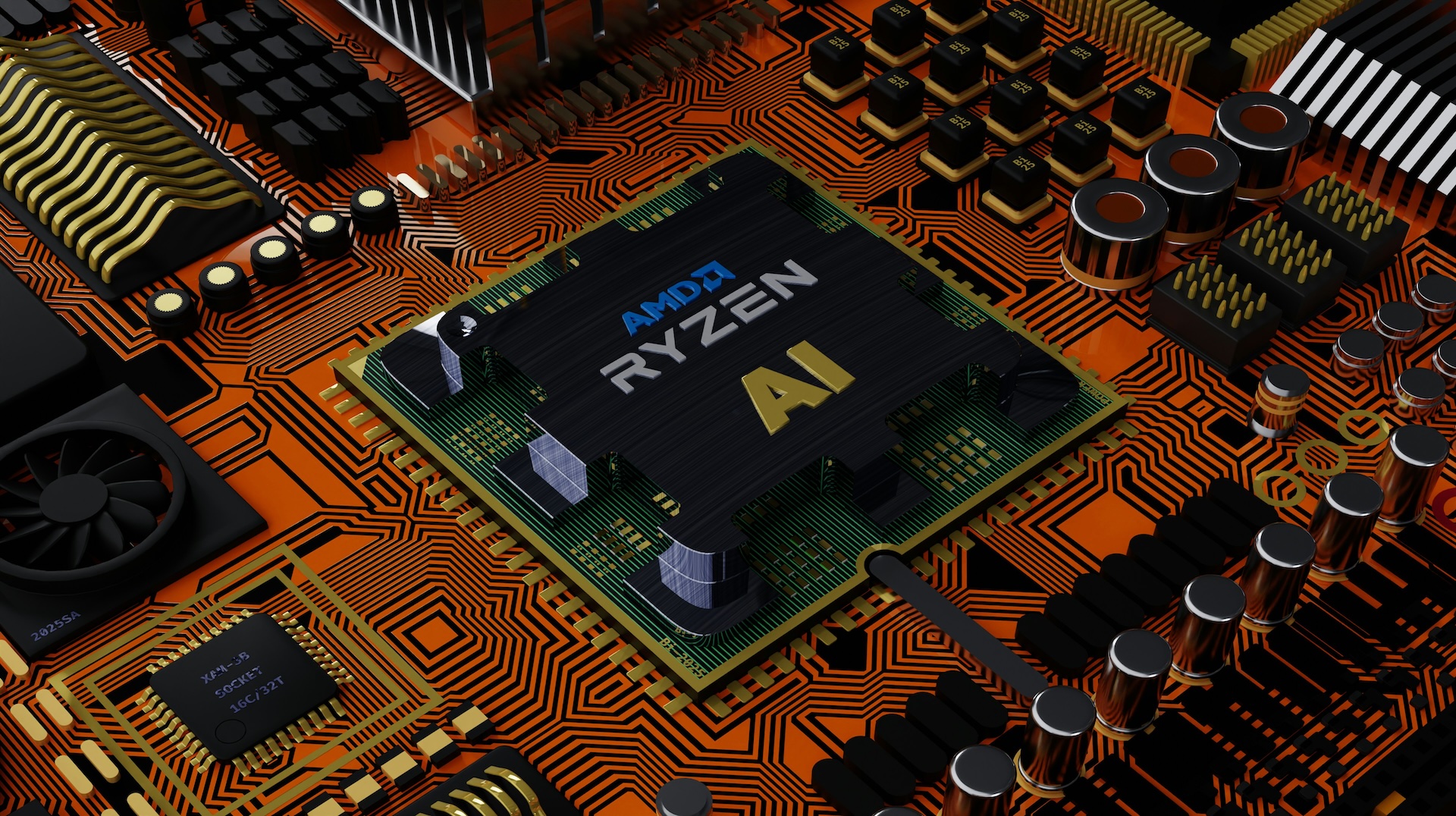
The chip industry is a clear example. Semiconductor companies are constantly innovating to produce faster, more efficient chips, with the development timelines becoming increasingly shorter. Intel held the top spot for years, then AMD came back hard with its Ryzen line and forced Intel to accelerate its own roadmap significantly. NVIDIA, meanwhile, sprinted ahead on AI chips while both were focused on CPUs. Nobody gets to coast.
In cloud computing, when AWS releases a new service, Google Cloud and Azure typically follow within months. Nobody can afford to fall behind, so everyone keeps accelerating.
The rise of startups and disruptive innovations has forced established companies to innovate faster to remain competitive. The fear of disruption compels organizations to adopt agile development methods and speed up their product cycles.
5. Cloud Computing and SaaS (Software as a Service)
Before cloud computing, launching a new product meant buying servers, setting up data centers, and spending months on infrastructure before writing a single line of product code.
Now a small team can launch something on Amazon Web Services (AWS), Microsoft Azure, or Google Cloud in an afternoon, scale it to millions of users overnight, and shut it down just as fast if it doesn't work. That dramatically lowers the cost of trying something new, which means more things get tried — and more things ship.
Cloud platforms provide scalable, on-demand computing resources, enabling faster deployment and experimentation. Businesses no longer need to invest heavily in infrastructure, allowing them to innovate and iterate more rapidly.
SaaS-based models offer continuous delivery and updates, reducing the need for long product development cycles. Companies can push updates and improvements to customers in real-time, speeding up the adoption of new features and innovations.
SaaS products in particular can push improvements to all their users at once, overnight, with no installation required on anyone's end.
Airbnb is a classic example. They ran almost entirely on AWS and were able to scale from a small startup to a global platform without building their own data centers. That speed of scaling just wasn't possible before cloud computing existed.
SaaS products take it even further — Slack, for instance, can push improvements to all of its users at once, overnight, with no action required on anyone's end.
6. Consumer Demand for Innovation
Consumers now expect constant updates, faster products, smarter features, and near-instant improvements. That pressure forces companies into continuous development cycles where standing still for even a year can mean falling behind competitors.
In fields like smartphones, gaming, and entertainment, customers expect constant upgrades and improvements. This pushes companies to innovate quickly and keep their product offerings relevant.
Consumer expectations for faster, better, and more personalized products push companies to innovate rapidly. AI and machine learning tools are being updated and deployed faster than ever, with frameworks like TensorFlow and PyTorch frequently releasing new versions to support consumer expectations and demand for cutting-edge innovations.
Increased competition and consumer demand for frequent updates drive companies to innovate faster. Industries such as consumer electronics, automotive, and software are all experiencing shorter product lifecycles because of these pressures.
- In the automotive sector, electric vehicles (EVs) and autonomous driving technologies are being developed at an unprecedented pace due to advancements in AI, sensor technologies, and regulatory incentives.
- In Consumer Electronics (smartphones, laptops, and wearables), product lifecycles have shortened significantly. Consumers now expect annual or even bi-annual releases of new products, forcing companies to iterate and innovate at a rapid pace.
7. Government and Industry Regulation
Governments worldwide are pouring money into AI, clean energy, renewable energy, space exploration, and other emerging technologies. These investments provide the funding necessary for rapid advancements by accelerating research that eventually makes its way into commercial products.
The CHIPS Act in the US, for example, committed over $50 billion to domestic semiconductor manufacturing — directly accelerating how quickly new chips get developed and produced.
At the same time, new regulations in fast-moving industries force companies to adapt quickly — and the ones that adapt first often get to market first.
On the regulatory side, the EU's AI Act is pushing companies to adapt their products faster to meet new standards. The companies that get ahead of those requirements often beat slower-moving competitors to market.